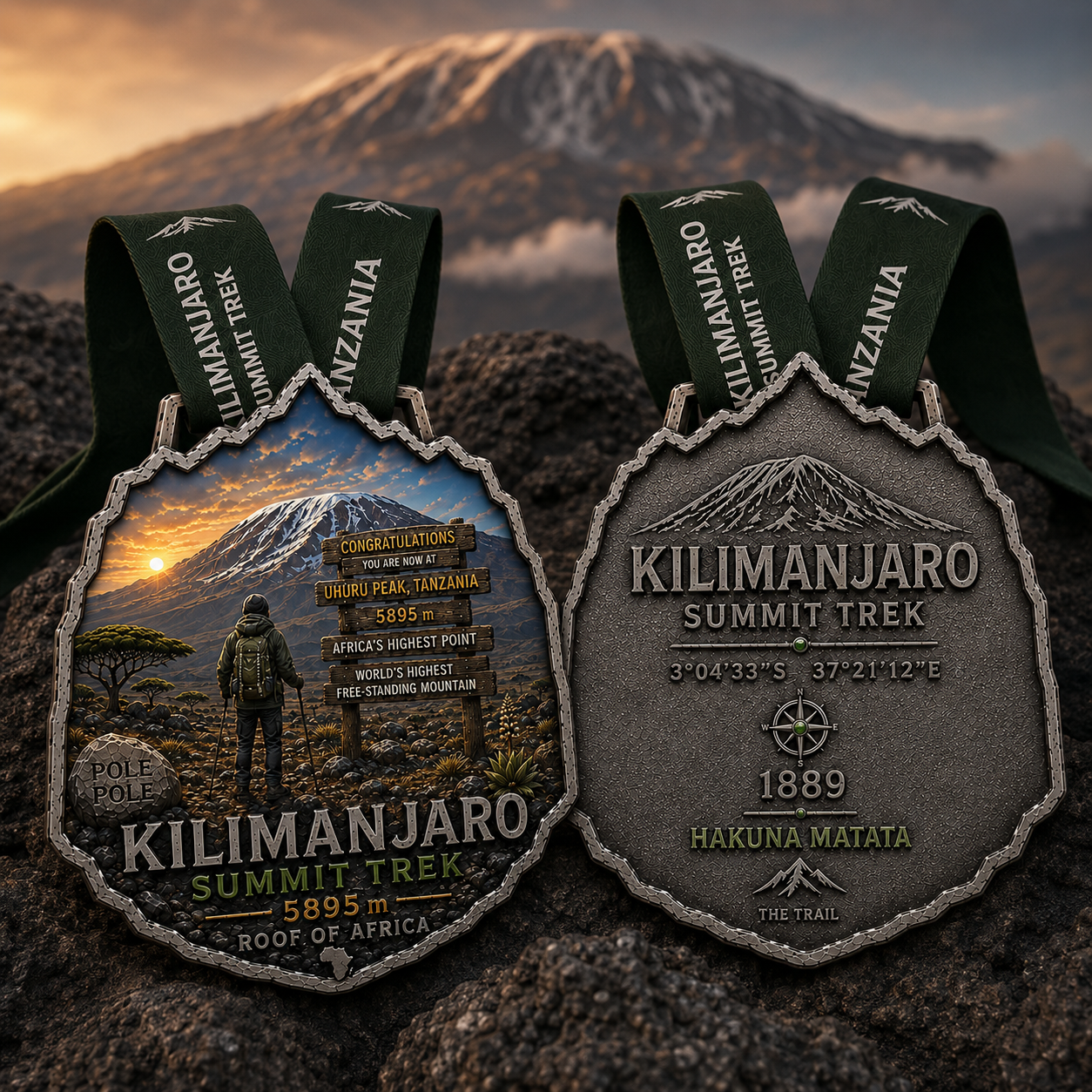
Kilimanjaro Summit Trek Trail Medal, front and back, on volcanic rock below Kilimanjaro at sunrise

COMING SOON

Kilimanjaro

Trail / Location

Tanzania

Description

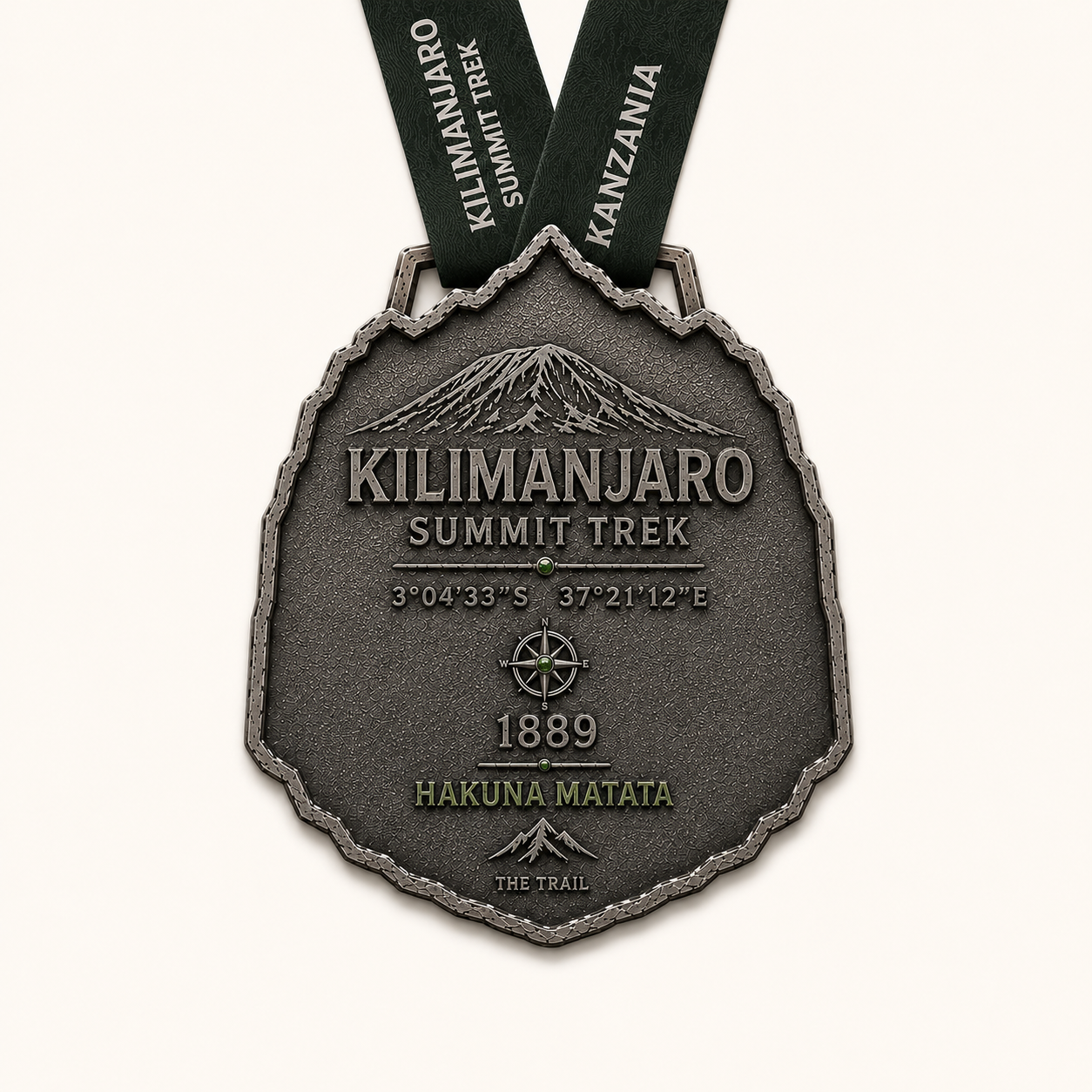
Inspired by the journey to Uhuru Peak at 5,895m, this Trail Medal brings together the landscape, milestones and spirit of climbing Mount Kilimanjaro, Africa's highest mountain and the world's highest free-standing mountain. The front captures Kilimanjaro rising above the African landscape at sunrise, with a lone trekker making the journey towards the iconic Uhuru Peak summit sign. The design includes rugged volcanic terrain, distinctive mountain vegetation and "Pole Pole" the Swahili expression meaning slowly, slowly, and a philosophy every Kilimanjaro trekker quickly becomes familiar with. The African continent silhouette and "Roof of Africa" complete the summit story. The reverse features the silhouette of Mount Kilimanjaro, the summit coordinates 3°04′33″ S, 37°21′12″ E, a compass representing the journey, and 1889, marking the year of the first recorded ascent of Kilimanjaro. "Hakuna Matata" adds another distinctly East African touch to the design. Finished with a custom dark-green ribbon featuring Kilimanjaro Summit Trek, Tanzania, mountain graphics. A medal created to remember every Pole Pole step towards the Roof of Africa 5,895m.
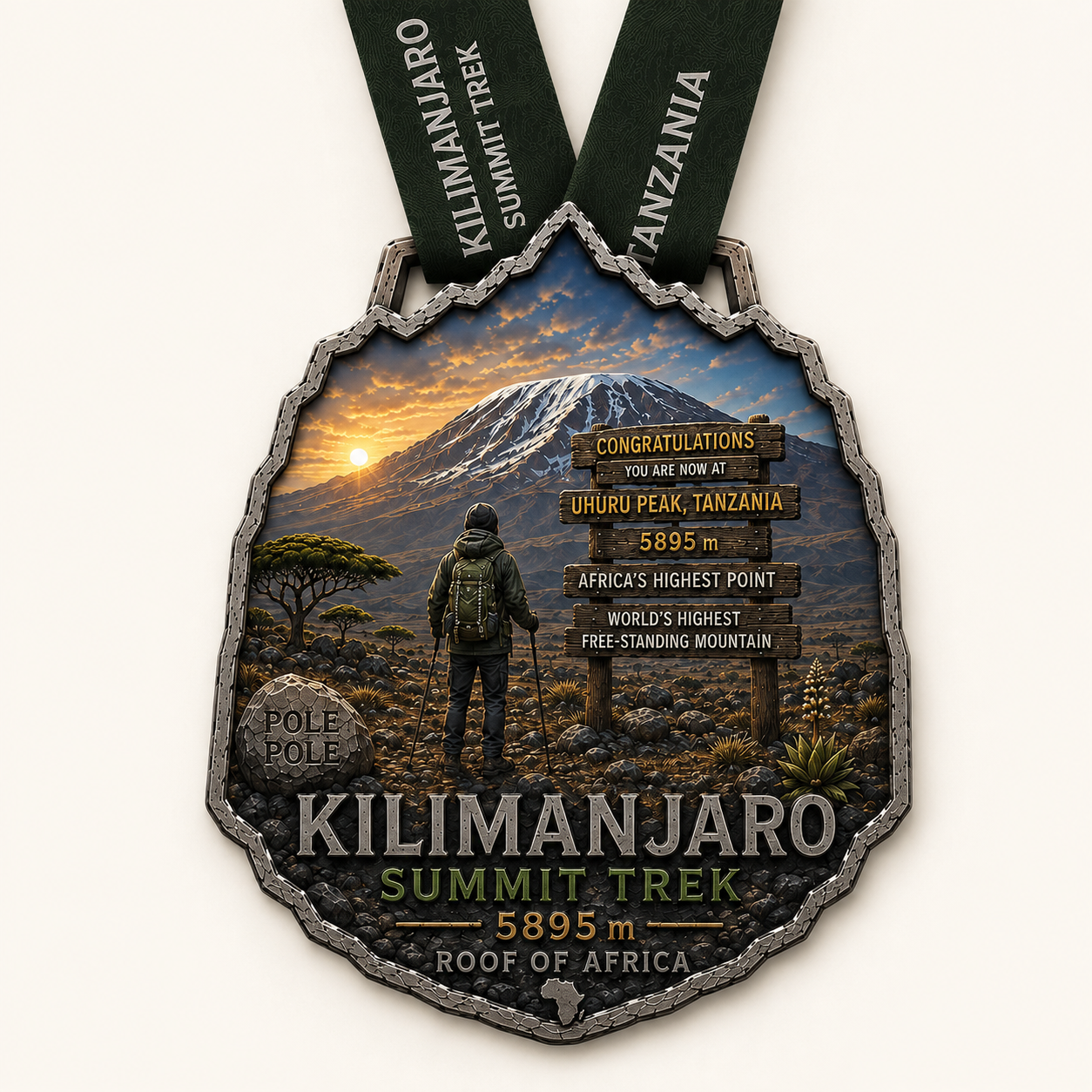
Front of the Kilimanjaro Summit Trek Trail Medal
Back of the Kilimanjaro Summit Trek Trail Medal

The story

THE STORY BEHIND THE MEDAL

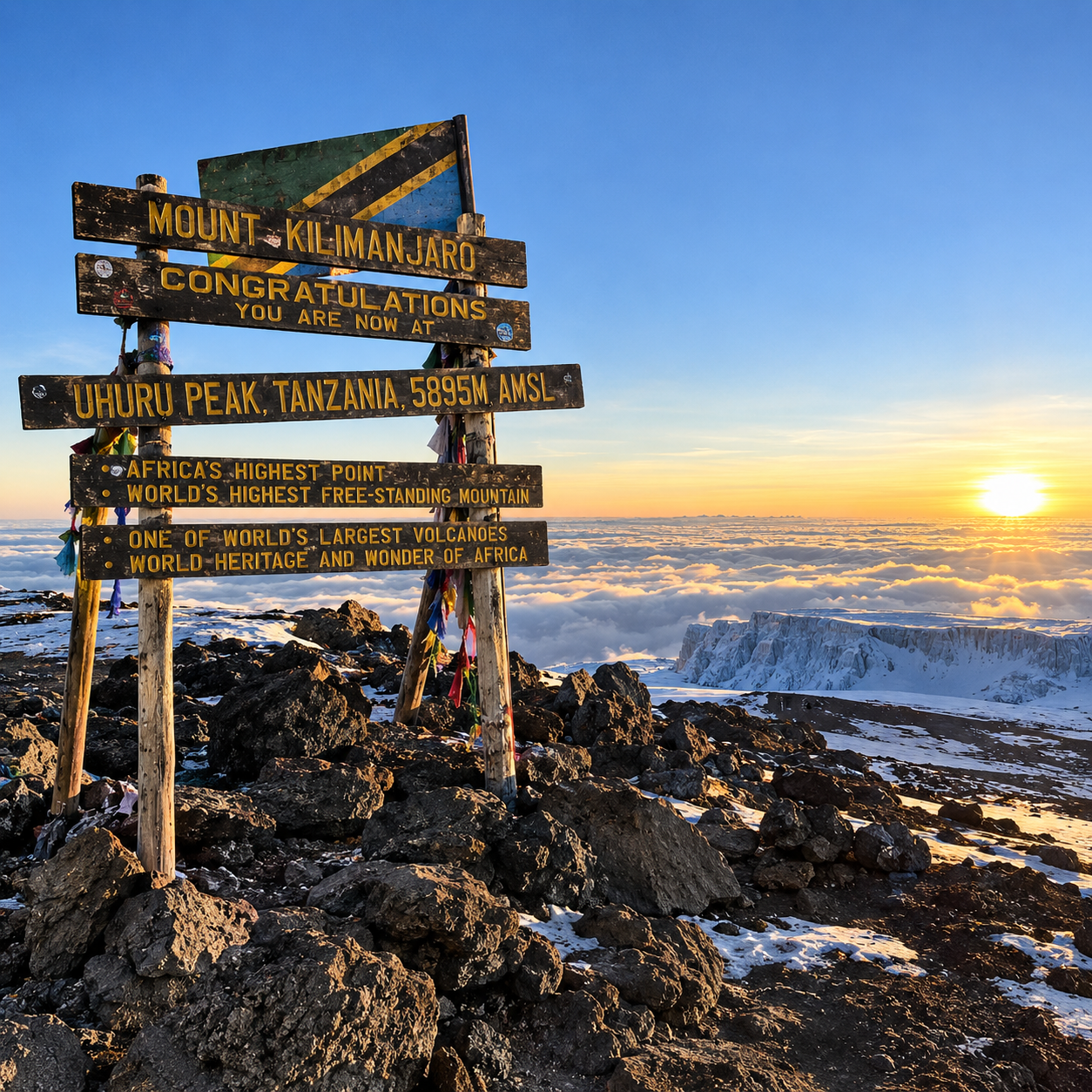
Uhuru Peak summit sign on Mount Kilimanjaro at sunrise

The trail

The journey up Mount Kilimanjaro begins at one of several gateways surrounding the mountain, including Machame, Marangu, Lemosho and Rongai. Each route offers a different approach, but all lead towards Kibo and Uhuru Peak, the highest point in Africa at 5,895 metres. The landscape changes dramatically throughout the ascent. The trek begins in warm cultivated foothills and dense montane rainforest before rising into open heath and moorland. Higher up, vegetation disappears and the route crosses a stark alpine desert of volcanic rock, scree and exposed ridges. The final summit climb takes place in darkness and extreme cold, with trekkers moving slowly through thin air towards the crater rim. Depending on the route, the trek generally covers approximately 53–98 kilometres and takes between 5 and 10 days. Popular routes such as Machame usually take six to seven days, while Lemosho takes seven to eight days and provides more time for acclimatization. Although the standard routes require no technical climbing equipment, the altitude, changing weather and long summit night make Kilimanjaro a serious endurance challenge. What makes this trek unlike almost any other is the journey through five distinct ecological zones from tropical forest to an arctic summit, in only a few days. Reaching Uhuru Peak reveals Kilimanjaro's volcanic crater, remaining glaciers and vast views across the plains of Tanzania. Standing on the "Roof of Africa" is not only the end of the climb; it is the reward for days of patience, resilience and moving slowly towards the summit - pole pole. At a glance: Location: Kilimanjaro National Park, Tanzania Highest point: Uhuru Peak 5,895 m Distance: Approximately 53–98 km, depending on the route Typical duration: 5–10 trekking days Difficulty: Challenging, primarily because of altitude Terrain: Rainforest, moorland, volcanic ridges, alpine desert and summit scree Main landmarks: Shira Plateau, Lava Tower, Barranco Wall, Kibo crater and Uhuru Peak Best climbing periods: January–March and June–October Distinctive title: The Roof of Africa

Interested in Kilimanjaro?

Register Your Interest